
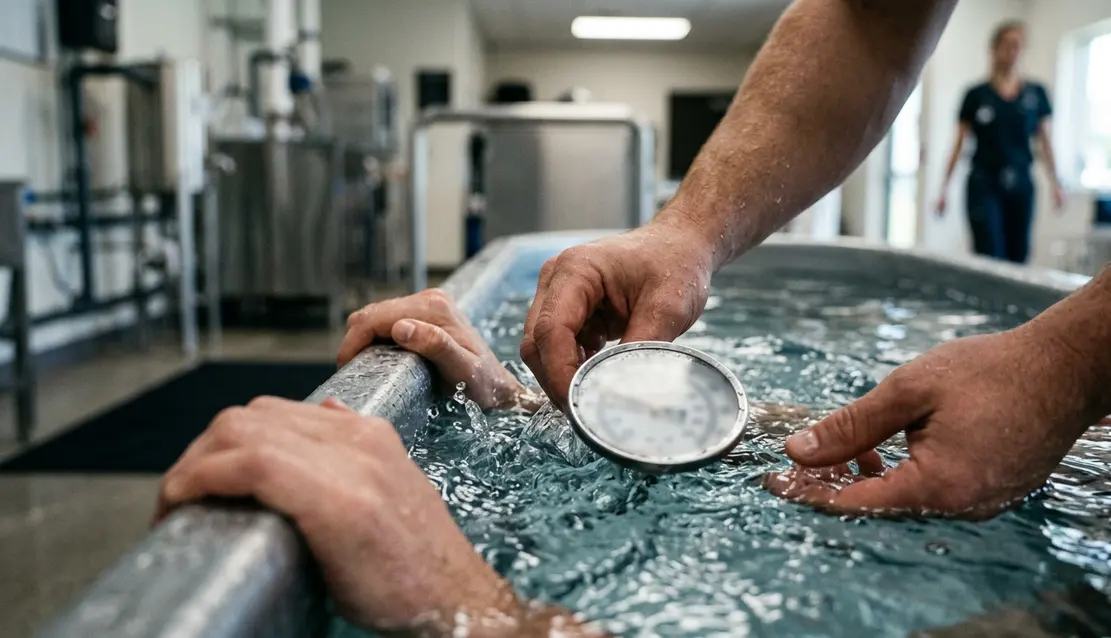
A cold plunge begins with a sharp intake of breath. The shoulders rise, the skin tightens and the room suddenly feels very present. That rush explains much of the practice’s appeal, yet it can also blur the line between an immediate stress response and a lasting health benefit. This guide follows the body from first contact through rewarming, then examines what that experience can reasonably tell us about mood, recovery, metabolism and immunity. The aim is measured experimentation within a mindful home, without turning discomfort into a badge of achievement.
What's Inside
- Drawing the boundary around cold-water immersion
- What happens from the first gasp to rewarming
- Reading claims about mood, recovery and immunity
- Starting with a gentler cold-exposure ladder
- Choosing a dose that serves a clear purpose
- How this cold-plunge guide was assembled
Drawing the Boundary Around Cold-Water Immersion
Cold-water immersion means deliberately placing much of the body in water cold enough to trigger an immediate physiological stress response. The practical marker is the familiar cold-shock cluster: an involuntary gasp, faster breathing and constriction of blood vessels near the skin.
That cluster generally declares itself within the first 30 seconds to 3 minutes. Waiting for a long soak before calling the experience “cold” misses the most important part of the exposure. The entry period carries the abrupt respiratory and cardiovascular demand.
A cool shower, winter swim and session of whole-body cryotherapy belong in separate columns of the design notebook. A shower leaves much of the body exposed to air and allows the water to be redirected quickly. Winter swimming adds movement, weather and the practical problem of reaching an exit. Whole-body cryotherapy uses cold air rather than water. Each changes heat transfer, control and escape conditions, so their effects and risks cannot be treated as interchangeable.
The dose has several controls
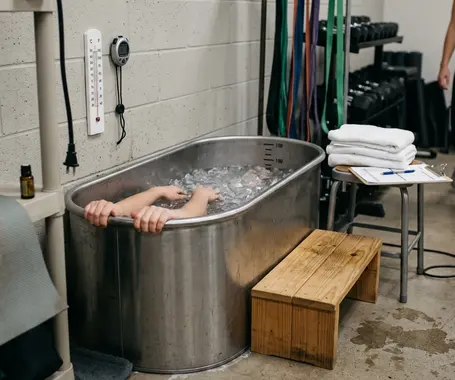
Temperature attracts the most attention, especially when ice-filled tubs appear in photographs. Immersion depth and duration also matter. So do personal health, acclimation and the surrounding environment. Waist-deep water beside a stable step presents a different problem from shoulder-deep water in a container that is awkward to leave.
- Water temperature: how intense the cold feels on entry.
- Immersion depth: how much of the body is exchanging heat with water.
- Duration: how long the stress and heat loss continue.
- Setting: whether supervision, a clear exit and a warm room are available.
- Individual response: how breathing, alertness and rewarming unfold that day.
This is the useful definition to carry forward: cold exposure behaves like a variable dose. A colder tub does not automatically create a more worthwhile practice.
From the First Gasp to a Warm Room
What is the body doing when the water feels electrifying? Several responses arrive together. A gasp interrupts the normal breathing rhythm, breathing accelerates, blood vessels near the skin constrict and alertness rises sharply. The sequence may feel clean and energizing because attention narrows to the immediate physical event.
The pleasant interpretation does not remove the acute workload. Breathing and cardiovascular regulation have to respond to a sudden environmental demand. This is why the opening moments deserve more care than the dramatic photograph taken once someone appears settled.
Shivering is protective work
After the plunge, the story continues. Lingering chill and continued drift in core temperature may occur through roughly the first 10 to 30 minutes out of the water. Depending on immersion depth and duration, shivering may occupy much of the first 15 to 45 minutes or so of recovery.
Shivering generates heat. It is a protective response rather than proof that the body has become metabolically healthier. That distinction matters when visible shaking gets framed as evidence that the session “worked.” What it shows is a body trying to restore warmth.
Rewarming belongs inside the plan, rather than as an improvised ending. Dry clothing, a warm room and a calm recovery period of about 20 to 40 minutes give the body a predictable route back. Moving directly from one temperature extreme to another adds another variable when the useful information is how the chosen exposure actually felt.
Plan the Landing
Set out dry layers before entering the water and keep the route to a warm room clear. A plunge that is easy to begin should also be easy to end.
What the Popular Cold-Plunge Claims Actually Describe
The first-gasp alertness of a plunge belongs on a different ledger from a claimed lasting lift in anxiety, depression or everyday immunity. Combining them under one broad promise makes a short-lived sensation carry more weight than it can support.
Mood and the afterglow of completion
A person may leave the water feeling alert, exhilarated or pleased to have completed a difficult ritual. Those experiences are real in the moment. They do not, on their own, establish a lasting improvement in anxiety, depression or psychological resilience.
The distinction can feel overly careful when the emotional lift is vivid. It is still worth keeping. An immediate state change answers the question “How do I feel after this?” A durable mental-health outcome asks what changes across ordinary life, beyond the plunge and its sense of accomplishment.
Soreness, recovery and strength goals
Cold immersion may suit selected post-exercise recovery preferences, particularly when the desired outcome is subjective relief from soreness. That can be useful before a tightly scheduled activity or when post-exercise comfort is the stated aim.
Recovery and adaptation are separate outcomes. Strength-focused training relies on the body’s normal response after exercise, and repeatedly blunting that response may conflict with some adaptation goals. A routine chosen for comfort therefore deserves to be judged against the training result the person actually wants.
Metabolism and immunity need a longer lens
Cold creates a heat-producing demand, and shifts in immune markers may attract interest. Those immediate responses do not settle broader claims about metabolic health or everyday immunity. Protocols vary across research, athletic and home settings, often in temperature, depth, duration and frequency.
The home-plunge lifestyle wave of the past several years is best read as a cultural trend, not a substitute for matched evidence. Popularity tells us that the ritual resonated. It does not make unlike protocols equivalent.
“Name the immediate response, the outcome you want and the tradeoff that travels with the practice.”
Olivine Life editorial test for cold-exposure claims
Protocol differences keep broad conclusions thin. For a sustainable living routine, a modest claim that survives scrutiny is more useful than an expansive promise attached to a striking tub.
A Gentler Ladder Into Cold Exposure
“Do I need an ice-filled tub to find out how I respond?” No. A comfortably cool finish to a shower provides the lowest controllable starting point. It allows the temperature to be adjusted quickly, keeps the exit simple and introduces the sensation without committing the whole body at once.
If that experience remains controlled, the next step can be shallow immersion or water that feels cool without being at the coldest available setting. A full plunge comes later, only after the earlier steps have supplied useful information about breathing and rewarming.
- Finish a normal shower with comfortably cool water. Pay attention to whether breathing settles while the water remains adjustable.
- Try shallow or less-cold immersion. Keep the exit clear and arrange for another person to be present.
- Approach a full plunge only after tolerating the earlier steps. Preserve the same supervision and exit plan.
A cool-shower finish or brief moderate immersion is a complete endpoint here. An ice-filled tub is not the credential that finishes the practice.
Control matters more than spectacle
Colder and longer are poor automatic markers of effectiveness. The practical aim is a controlled response: entry without turning the session into a breath-holding challenge, an exit that remains easy and a rewarming period that does not become chaotic.
Early attempts work best as supervised tests. Open water adds distance, weather and uncertain footing, while an awkward tub may trap someone who is already gasping. Solitary plunges in either setting remove the person who could help bring the attempt to an immediate close.
Keep the Exit Easy
Choose a setting where leaving the water takes one simple movement. Avoid solitary open water and any container that becomes difficult to climb out of once breathing accelerates.
Choose the Cold Dose Before Testing Your Nerve
Cold plunges can feel invigorating and may suit a specific recovery preference. Claims about metabolism, immunity and durable psychological resilience reach beyond that immediate experience. A useful experiment begins by narrowing the purpose.
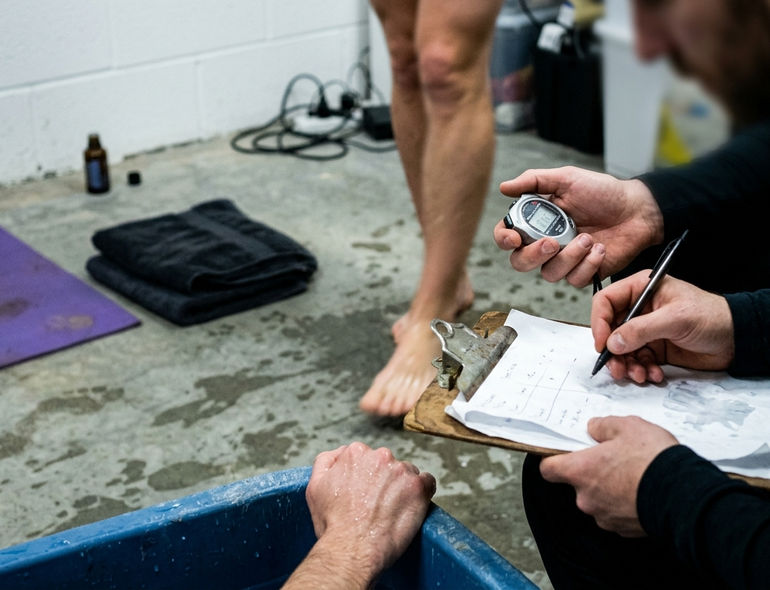
Choose one goal. “I want less perceived soreness after this workout” is concrete. So is “I want a brief alertness ritual before starting the day.” Trying to improve mood, immunity, metabolism and athletic performance in the same session leaves no clean way to judge what happened.
Keep a short exposure record
A simple log turns sensation into something that can be reviewed. Record the method, the immediate response and the rewarming experience. Then note sleep, energy and training across the next day or two. Minutes endured carry less practical value than the effect on the rest of the day and the sessions that follow.
- The single goal chosen before exposure
- Whether the method was a cool shower, shallow immersion or full plunge
- What happened to breathing and alertness on entry
- How the body felt during the calm rewarming period
- Any noticeable effect on sleep, energy or training afterward
This approach fits a mindful home because the ritual earns its place through observation. If a moderate exposure meets the stated goal, escalation adds intensity without automatically adding value.
How Olivine Life Built This Cold-Plunge Guide
This Olivine Life editorial guide separates plausible short-term responses from established health outcomes. The claim review used the same three questions for mood, soreness, strength adaptation, heat-driven energy demand and immune-marker shifts: What happens immediately? What result does the reader want? What tradeoff accompanies the method?
The scope is general wellness education rather than individualized medical advice. Research, athletic and home protocols were treated as non-equivalent because differences in water temperature, immersion depth, duration, frequency and exit conditions restrict broad comparisons.
That editorial boundary also shaped the safer-practice ladder. It applies to a controllable home or supervised setting. It does not extend to solitary open water or an exit that could trap a person who is already struggling to control their breathing.
Before your next cold exposure, spend two to five minutes writing down your single goal, the exact signal that will end the session and the name of the person who will be present.