

The most sustainable laundry habit is not a dramatic one. It is the quiet discipline of washing with a little more judgment: fewer automatic loads, cooler water when it makes sense, less detergent, gentler drying, and a longer life for the clothes already in the wardrobe.
What's Inside
- What the Footprint of Laundry Actually Includes
- The Hidden Warning: Every Wash Can Release Fibers
- Where Laundry Uses the Most Household Energy
- Detergent Choice Matters Less Than Using It Correctly
- How to Build a Lower-Impact Wash Routine
- Tip: Create Three Default Laundry Settings
- Common Sustainable Laundry Mistakes to Avoid
- Bibliography
- The Sustainable Laundry Rule That Holds Everything Together
What the Footprint of Laundry Actually Includes
The laundry footprint is the combined environmental impact of washing, drying, detergents, water use, microfiber release, and the wear placed on garments over time.
That last part matters. A jumper ruined by heat, a black shirt greyed by too much detergent, a linen sheet weakened by harsh cycles: these are not just household annoyances. They push replacement closer. In a mindful home, garment care sits beside clean beauty and sustainable living as part of the same daily ethic: use what you own with more care.
This article is not a purity test. It focuses on decisions people actually make beside the washer: how often to wash, which temperature to choose, how full to load the drum, how much detergent to measure, whether a cycle is too aggressive, and whether the dryer is truly needed.
Laundry is a useful place to begin because it repeats. The same small choice, made twice a week or every evening in a busy household, starts to leave a shape behind.
The Hidden Warning: Every Wash Can Release Fibers
Microfiber shedding is easy to miss because it is almost invisible. During washing, tiny strands break away from fabric as garments rub against the drum, the water, and each other. Heat, strong agitation, rough surfaces, and long cycles can all make that abrasion more intense.
Synthetic fabrics deserve close attention here. Polyester, nylon, acrylic, and elastane blends can shed plastic-based fibers. Activewear, fleeces, stretch denim, socks, and blended knits often sit in this category. Natural fibers such as cotton, linen, wool, and viscose behave differently, but they are not impact-free. Dyes, finishes, farming, processing, and garment construction still count.
In the wash tests reported by Napper and Thompson’s 2016 Marine Pollution Bulletin study, a 6 kg wash load released up to 700,000 fibers under tested conditions involving variables such as agitation, temperature, and detergent.

Note: That figure should be read as a warning signal, not a prediction for every home. Actual release depends on fabric type, garment age, detergent, machine design, load size, and filtration.
The practical lesson is not to panic and buy a drawer full of laundry gadgets. Filtration can help catch some fibers, but it does not make constant synthetic washing harmless. The better first move is duller and more effective: reduce unnecessary washing, use gentler cycles where appropriate, and keep high-shed garments away from rough, heavy loads.
Where Laundry Uses the Most Household Energy
Energy use in laundry usually gathers around two acts: heating water and machine drying.
Water use has a different pattern. It depends on the washer design, the cycle selected, and the way the drum is loaded. A high-efficiency machine can still be undermined by habits that trigger extra rinses or lead to rewashing. A half-load on the wrong setting can be wasteful; a drum packed too tightly can be no better.
Hot, warm, and cold are tools, not moral categories
Cold or cool washing works well for many lightly worn everyday garments when paired with the right detergent and enough movement in the drum. Shirts worn once indoors, pajamas, casual cotton layers, and many synthetics often do not need hot water.
Hotter water still has a place. Oily soils, towels, bedding, kitchen cloths, illness-related laundry, and some heavily sweated garments may need warmer settings if the care label allows. The aim is not to worship cold washing. It is to stop using heat by reflex.
Hygiene comes first when fabric has been exposed to body fluids, mold, kitchen grease, heavy sweat, or illness. A sustainable laundry routine should never make a household less clean.
Detergent Choice Matters Less Than Using It Correctly
The most common detergent problem is not choosing the wrong bottle. It is using too much of it.
Caps and scoops can quietly encourage overpouring, especially when a load smells sweaty or looks large. Excess detergent can cling to fabric, dull colour, irritate skin for some people, and leave the machine asking for extra rinsing. The clothes may come out less fresh, not more.
Look for concentrated detergents with clear dosing instructions. Fragrance-conscious formulas suit households that prefer a calmer sensory environment. Phosphate-free options may be relevant depending on local regulation and product availability. No single format is universally best; powders, liquids, sheets, and concentrates all come with trade-offs in packaging, transport, performance, and fabric compatibility.
When enzymes help, and when they do not
Enzyme detergents can be useful for protein and food soils: egg, milk, sweat, blood, grass, and similar marks. They are the quiet technicians of the laundry shelf.
Delicates need more caution. Wool and silk can be damaged by some enzyme formulas unless the label clearly says the product suits those fibers. A beautiful jumper is not improved by a detergent that treats it like a gym sock.
How to Build a Lower-Impact Wash Routine
A good routine begins before the machine starts. The sorting basket is where much of the environmental decision has already been made.
Step 1: Sort by fabric behavior as well as color
Separate lint producers from synthetics. Keep heavy denim away from delicate knits. Wash towels apart from activewear when possible. This is less about fussiness than friction: rough, heavy fabrics can abrade smoother or stretchier garments, increasing wear and potentially encouraging fiber release.
Colour sorting still matters, of course. But a design notebook approach to laundry looks at how materials behave under stress. A thick bath towel, a recycled polyester running top, a silk camisole, and a pair of black jeans do not belong in the same story.
Step 2: Wash only when needed
Not every worn item is dirty. Air out lightly worn sweaters. Spot-clean a small mark before committing the whole garment to a wash. Use a garment brush for lint, hair, and surface dust. Steam can refresh certain pieces, provided the fabric tolerates moisture and heat.
This is where sustainable living feels mercifully practical. A chair near a window, a good hanger, and ten minutes of air can save a wash load without asking anyone to become austere.
Step 3: Choose the least harsh cycle that will do the job
Use gentle cycles for delicate knits, viscose, silk, and lightly soiled blends when the care label supports it. Use normal cycles for sturdy everyday cottons. Reserve more aggressive settings for items that truly need the extra mechanical action.
Step 4: Dry with fabric life in mind
Air drying saves machine-drying energy and reduces heat stress. It is not always possible, especially in damp flats or busy family homes, but even partial air drying helps protect fibers. If using a dryer, choose lower heat where the garment allows, and remove items once dry rather than baking them into crisp submission.
Tip: Create Three Default Laundry Settings
Decision fatigue is real. A note near the washer can do more than a long lecture on sustainability because it meets the household at the exact point of action.
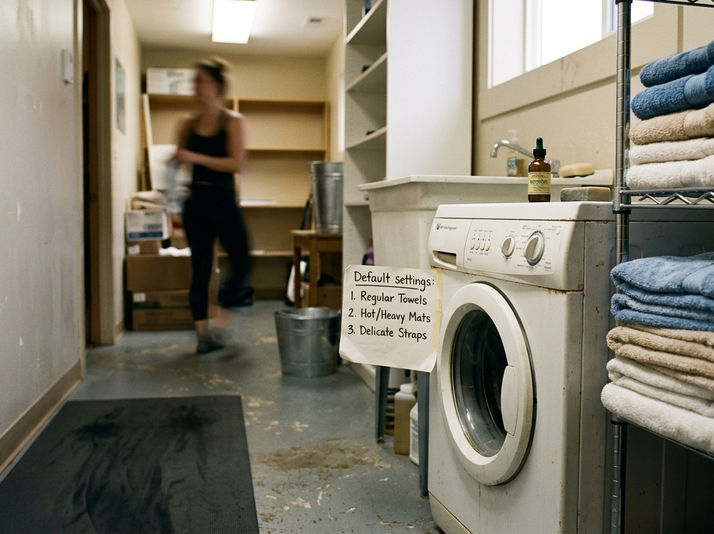
Quick Tip: Write three default settings on a card, tape it inside a cupboard door, or save it as a phone note shared with the household.
Three default laundry settings for a lower-impact routine| Default | Use for | Setting |
|---|---|---|
| Everyday refresh | Lightly worn shirts, suitable underwear, pajamas, and casual clothing | Cold or cool water, measured detergent, normal or gentle cycle, air dry when possible |
| Hygiene load | Towels, bedding, cloths, illness-related laundry, or heavily soiled items | Warmer wash if the care label allows, full rinse, thorough drying |
| Delicate care | Wool, silk, viscose, lace, structured pieces, and fine knits | Specific delicate detergent if needed, low agitation, mesh bag where useful, air dry flat or shaped |
The point is not to make laundry complicated. It is to remove the weekly guesswork. Once the defaults exist, the household only needs to notice exceptions.
Common Sustainable Laundry Mistakes to Avoid
Mistake 1: Washing everything cold
Cold washing can be excellent for lightly worn clothing. It is less convincing when a load contains body fluids, mold, kitchen grease, heavy sweat, or illness exposure. Care labels, skin needs, and the kind of soil on the fabric should guide the setting.
Mistake 2: Overfilling the washer to save water
A tightly packed drum often cleans poorly. Clothes need room to move through water and detergent. If they cannot move, soil stays trapped, detergent may not rinse well, and the load may need washing again. That is not efficiency; it is deferred work.
Mistake 3: Adding more detergent because clothes smell sweaty
Odor is not always a detergent shortage. It can come from trapped residue, slow drying, bacteria in damp fabrics, or clothing left too long in the machine. In those cases, more product may deepen the problem.
Try measuring detergent precisely, drying items promptly, and giving the machine itself regular maintenance according to the manufacturer’s instructions. The cleanest scent is often the absence of residue.
Summary: Sustainable laundry works best when it protects three things at once: cleanliness, fabric life, and resource use.