Your entryway does not have to be large to set the tone for the whole home. In many houses and flats, it is barely more than a strip of floor, a hook, and a place where the day drops its evidence: keys, shoes, parcels, school forms, dog bags, receipts, and the jacket nobody quite hangs up.
A calm arrival is not about making that space look empty. It is about giving each repeat object a small, reliable place to land, so the first minute at home feels less like negotiation and more like exhale.
What's Inside
- Why Your Entryway Feels Stressful Before It Looks Messy
- Before You Rearrange: Safety, Scent, and Shared-Space Boundaries
- Start With a 10-Minute Entryway Audit
- Step 1: Sort Items by What They Need to Do
- Step 2: Build Micro-Zones With Bowls, Trays, Hooks, and Baskets
- Design Tip: Add One Calming Cue, Not Five
- Step 3: Reduce Visual Noise Without Hiding What You Use Daily
- Step 4: Use a 5-Minute Reset to Keep the Drop Zone Working
Why Your Entryway Feels Stressful Before It Looks Messy
The entryway is the first threshold between public pace and private life. It has to absorb weather, errands, work thoughts, school schedules, pets, deliveries, and the small objects we carry because leaving the house now requires a minor inventory.
That is why it can feel stressful even before it looks untidy.
Visual noise starts with unfinished decisions
Loose keys on a radiator cover. Mail spread beside a lamp. Shoes pointing in three directions. A bag slumped near the door because it needs to leave again tomorrow. Pet leashes, umbrellas, receipts, sunglasses, reusable bags, parcels waiting to be returned. None of these objects are dramatic on their own, but together they ask the eye to process too much at once.
A good drop zone is not a decorative tray bought in hope. It is a behavioral system. It works because it matches the way you enter, unload, remember, and leave again. The aim is not to create a perfect hallway photograph. The aim is to remove tiny points of friction from a moment that already carries enough.
Before You Rearrange: Safety, Scent, and Shared-Space Boundaries
Note: Keep the door swing, stair edge, hallway path, and emergency exit route clear before you add any basket, bench, hook, lamp, or rug. A beautiful entryway that blocks movement is not a calm one.
Start with clearance. Shoes should not gather where someone steps in from rain. Umbrellas should not lean where they can slide underfoot. Charging cords, school bags, gym bags, and shopping totes need to sit outside the main walking line, not across it.
This is particularly important in narrow flats, older homes with abrupt staircases, and households where several people arrive within the same hour.
Shared homes need permission-friendly choices
If you rent, share with housemates, or live in a building with common circulation rules, avoid drilling into walls without permission. Use existing hooks first. Try an over-door organizer, a freestanding coat stand, removable solutions suitable for the surface, or a piece of furniture already in place.
Scent deserves the same restraint. A strong diffuser beside the front door can be pleasant for one person and irritating for another, especially in a compact entrance. If indoor air quality is a concern, ventilation and source control matter more than masking smells; the EPA indoor air quality guidance is a useful starting point for broader household considerations.
Start With a 10-Minute Entryway Audit
Do not begin by shopping for storage furniture. Begin by watching the entryway you already have.
In practice, direct observation of current use tends to be more useful than choosing an ideal layout in advance. I have seen beautifully measured benches fail simply because the keys landed on the windowsill every evening and nobody wanted to turn left to reach the new drawer.
List what actually lands there
For two or three typical days, write down every object that comes to rest in the entryway. Include keys, wallets, sunglasses, school forms, reusable bags, coats, dog bags, shoes, parcels, letters, umbrellas, headphones, sports kits, and anything waiting to be returned.
Single-person homes may have a short list. Shared homes often produce a much longer one. That variation matters because the same hook rail that feels generous for one person may feel crowded by breakfast in a family hallway.
Find the friction points
Ask three plain questions:
- What gets dropped on the floor?
- What is hard to reach when leaving?
- What never makes it to its proper room?
The audit does require at least one stable landing surface, such as a windowsill, stair tread, shelf, console, or bench. If everything must remain on the floor, your first task is not styling. It is creating one safe, raised or contained place for the smallest daily items.
Step 1: Sort Items by What They Need to Do
Generic categories such as accessories or miscellaneous rarely help at the front door. Sort by function instead. An object is not just a thing; it has a job attached to it.
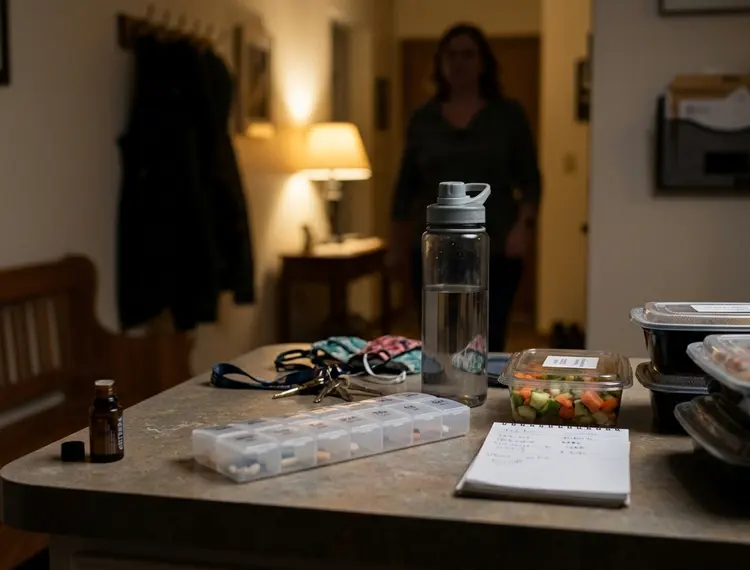
Create a temporary sorting surface. Use the floor if it is safe and clear, a towel, the dining table, an existing bench, or a wide stair tread away from the walking route. Keep it simple and slightly provisional, so you do not turn a small reset into a weekend project.
The four useful piles
Entryway sorting piles and what they mean| Pile | Use it for | Next action |
|---|---|---|
| Keep at the door | Items used almost every time you leave | Give them the easiest reach |
| Relocate | Objects that belong in another room | Return them before adding storage |
| Return to owner | Household items with a specific person attached | Place in a named basket, bag, or bedroom route |
| Discard or recycle | Old receipts, packaging, dead pens, expired notices | Remove them immediately |
You can also sort by timing: arrives daily, leaves tomorrow, needs action, belongs elsewhere, seasonal only. This small distinction prevents the common mistake of giving equal space to a winter umbrella, a daily wallet, and a parcel label you only need once.
Step 2: Build Micro-Zones With Bowls, Trays, Hooks, and Baskets
A drop zone is really a cluster of tiny destinations. Keys need one. Mail needs one. Bags, shoes, outerwear, and outgoing items each need their own landing logic.
Micro-zones work because they reduce the number of decisions required at the door. Instead of asking where should this go, the space answers for you.
No-buy substitutions that often work
- A ceramic bowl for keys.
- A baking tray for mail that needs sorting.
- A basket for scarves, gloves, or dog-walking supplies.
- A mug for pens near forms and school notes.
- A small plate for sunglasses.
- An existing tote for returns, library books, or parcels to post.
Place the most repeated items closest to the hand that uses them. If you unlock the door with your right hand, the key bowl belongs on the right if the layout allows. If children drop school forms before removing shoes, put the paper tray before the shoe basket, not after it.
This is not precious design. It is choreography.
Design Tip: Add One Calming Cue, Not Five
Quick Tip: Choose one sensory cue for the entryway, then stop. One warm lamp, one natural texture, or one gentle scent reads as intentional. Five cues can become another form of clutter.
There is a temptation to make the entryway carry the whole mood of the home. A lamp, a reed diffuser, a framed print, a bowl, a plant, a rug, a candle, a basket, a mirror. Soon the calming corner becomes a small stage set, and the daily objects have nowhere to go.
Pick one cue that suits the conditions of the space. A warm lamp can soften a dark hallway. A washable rug can make wet shoes feel contained. A small dish for a lavender sachet may be enough if scent is welcome in your household. An open window, when appropriate and safe, can do more for freshness than another decorative product.
Let material do quiet work
If you prefer a visual cue, choose one natural texture: wood, linen, rattan, wool, stone, or ceramic. These materials do not need to announce themselves. They bring a tactile steadiness that suits a threshold, especially when the rest of the space is doing practical work.
Step 3: Reduce Visual Noise Without Hiding What You Use Daily
A functional entryway should not hide every object. If the dog lead is used twice a day, burying it in a cupboard simply turns calm into inconvenience.
The better question is: can the object be easy to return and quiet to look at?
Containment creates edges
Trays make scattered items read as one group. Baskets conceal the busy texture of gloves, reusable bags, and soft accessories. Hooks lift bulky coats and bags off the floor. A shoe limit protects the ground plane, which is often the first thing that makes a narrow entrance feel overwhelmed.
Colour and material can help without a full redesign. If your entryway contains black trainers, brown paper bags, shiny keys, red school folders, a blue leash, and three kinds of packaging, place unlike objects inside one vessel. The basket or tray becomes the visible shape, not every individual thing inside it.
Do not overcorrect. A hallway where everything is hidden may look serene at noon and collapse by evening because nobody can put things away quickly. The right amount of visibility supports the habit.
Step 4: Use a 5-Minute Reset to Keep the Drop Zone Working
The drop zone will not stay perfect. It should not need to.
A short reset is more realistic than a weekly excavation. Choose a daily moment that already exists: making tea, feeding a pet, closing the curtains, setting the morning coffee, or switching off the hall lamp. Attach the entryway reset to that habit so it feels like part of the evening rhythm rather than another chore.
A simple timed reset
- Return keys and wallet to their chosen place.
- Clear mail from the tray, recycling what is no longer needed.
- Pair shoes and move extras away from the door.
- Hang bags, coats, and leads back on their hooks.
- Empty or check the outgoing tote.
- Remove anything that belongs in another room.
The reset is also a useful test. If you cannot complete it quickly, the system may be asking too much. Perhaps the mail tray is too small, the hook is awkwardly placed, or the basket has become a hiding place for decisions rather than a home for useful things.
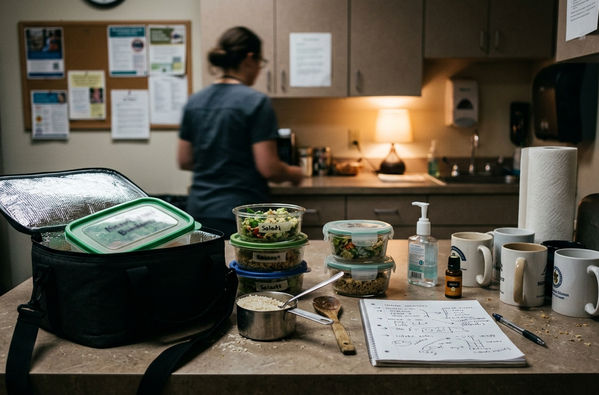
Summary: A calmer arrival comes from matching storage to behaviour: observe what lands, sort by function, give repeat items close destinations, keep paths clear, and maintain the system with a short daily reset.
The most graceful entryways I know are not the largest ones. They are the ones that understand the household. They leave room for wet shoes, forgotten letters, tired hands, and the quiet pleasure of coming home without immediately having to manage a mess.