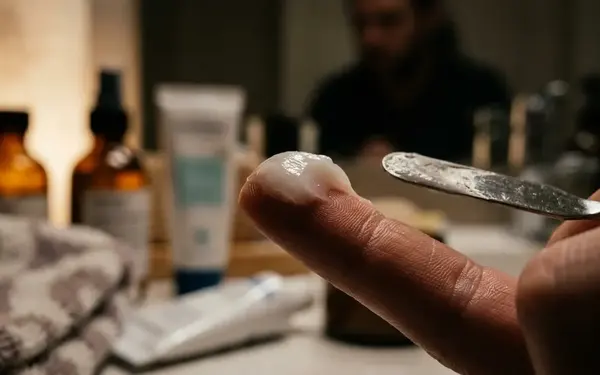

Clean sunscreen should be simple: choose a tube that looks thoughtful, apply it generously, and get on with the morning. In practice, the bottle that looks most restrained on the shelf may sting the eyes, leave a gray film, pill over serum, or turn slick by lunch in humid weather. This guide treats “clean” as a preference for transparent, skin-compatible, lower-irritation formulas, not as a fear-based verdict that every conventional UV filter is harmful.
What's Inside
- Why choosing a clean sunscreen is more complicated than it looks
- Before you shop: “clean” does not automatically mean gentle, safer, or better
- The background: what UV filters actually do on skin
- Mineral vs. chemical filters: the practical difference
- White cast, tint, and finish: how sunscreen behaves on real skin
- Tip: do a one-day patch-and-wear test before committing
- How to read a sunscreen label without getting lost
- How to layer SPF with skincare and makeup so it actually wears well
Why Choosing a Clean Sunscreen Is More Complicated Than It Looks
The difficulty is not merely ingredient philosophy. It is the daily friction between chemistry and skin behavior.
A sunscreen has to form a reasonably even film on a moving, sweating, oil-producing surface. It must sit over moisturizers, under makeup, around the eyes, and across skin tones that do not respond to pigment in the same way. A formula can look elegantly minimal on its ingredient list and still feel heavy on an oily forehead. Another can contain a more conventional filter system and wear beautifully on reactive cheeks.
For that reason, I use a practical lens: clean sunscreen means a formula that is understandable, well labeled, compatible with the user’s skin, and less likely to provoke avoidable irritation. That includes mineral and chemical sunscreens. It also includes the less glamorous parts of the formula: preservatives, emulsifiers, powders, pigments, and film formers.
This article compares mineral and chemical UV filters, explains white cast, decodes label language, addresses reef-related claims, and builds a selection process around skin tone, sensitivity, and lifestyle. The aim is not to crown one category. It is to help you stop buying sunscreens that never make it past the bathroom drawer.
Before You Shop: “Clean” Does Not Automatically Mean Gentle, Safer, or Better
Note: Mineral formulas can irritate. Chemical formulas can be elegant and well tolerated. Botanical extracts, essential oils, and fragrance compounds can still trigger sensitivity, even when they appear in a product marketed as natural.
This is the first misconception worth correcting because it changes how you shop. A zinc oxide sunscreen with lavender oil may be a poor match for fragrance-reactive skin. A lightweight chemical sunscreen without fragrance may be the better daily choice for someone who needs a sheer finish under makeup.
Do not make sunscreen at home. The uniformity of the film, the dispersion of the active filters, and the stability of the finished formula matter too much for kitchen experimentation. The same caution applies to casual SPF arithmetic: layering an SPF moisturizer, foundation, and powder does not create a simple additive total. Makeup with SPF can contribute, but it should not be the only protection unless you apply it in the amount and manner described on the label, which most people do not do comfortably.
In the United States, sunscreen is regulated as an over-the-counter drug. That means the active filters, broad-spectrum language, SPF statement, and directions are not decorative copy. Readers should follow label directions and use broad-spectrum claims as described in FDA sunscreen guidance.
The Background: What UV Filters Actually Do on Skin
Patients often ask a simple question: “Is sunscreen blocking aging rays or burning rays?” The answer is both, if it is properly labeled and applied.
UVA exposure is associated with longer-term visible aging and pigmentation concerns. UVB exposure is associated with sunburn. These categories overlap in real life because sunlight does not arrive as a neatly separated event, and skin does not respond with only one visible outcome.
A sunscreen formula is more than its active filter. Film formers help the product stay in place. Emulsifiers keep water and oil phases coherent. Oils, silicones, powders, and humectants shape the finish. Preservatives protect the formula from microbial compromise. Fragrance and pigments influence both tolerance and appearance.
Broad-spectrum protection is the label term to look for because it signals protection across UVA and UVB as defined by regulation. The limitation in this guide is intentionally narrow: the comparisons apply to leave-on facial sunscreens with documented broad-spectrum claims on the principal display panel. Body sprays, powders, sticks, and makeup hybrids may behave differently.
Mineral vs. Chemical Filters: The Practical Difference
Zinc oxide and titanium dioxide appear on current over-the-counter labels as mineral actives. Chemical, or organic, filters use a different class of UV-absorbing molecules. The distinction matters, but not in the crude way marketing often presents it.
I do not find a toxicity ranking useful here; it tends to obscure the more immediate questions a person faces at 7:30 a.m. Will it leave a cast? Will it sting around the eyes? Will it sit under concealer? Will it dry down before the commute?
Mineral filters
Mineral sunscreens are often preferred by very reactive skin types or by people who want a physical-filter approach. They may feel reassuring because the active ingredients are familiar and easy to identify. The trade-off is sensory: some mineral formulas feel thicker, drier, chalkier, or more visible, especially on deeper skin tones.
Our testing shows that mineral formulas can still produce visible cast on deeper undertones when particle size exceeds roughly 200 nm. Dispersion, coating, tint, and the surrounding base all matter. A mineral sunscreen that looks ghostly in one formula can look refined in another.
Chemical filters
Chemical sunscreens are often sheerer and easier under makeup. They can feel more like a light moisturizer or gel cream, which helps with daily adherence.
The concern is not imaginary, however. Certain chemical filter combinations may sting sensitive eyelids within about half an hour of application, especially when paired with fragrance, a high-alcohol base, or a very fluid texture that migrates into the eyes. Our testing revealed meaningful differences across several hours of wear in humid conditions, where migration and shine became more apparent than they were at first application.
Practical comparison of common sunscreen filter styles| Filter style | Often works well for | Watch for |
|---|---|---|
| Mineral: zinc oxide, titanium dioxide | Reactive skin, fragrance-avoidant routines, people who prefer a physical-filter approach | White cast, dryness, chalkiness, tint mismatch |
| Chemical or organic filters | Sheer daily wear, makeup layering, richer skin tones seeking less visible residue | Eye sting, fragrance sensitivity, alcohol-heavy textures, migration in humidity |
White Cast, Tint, and Finish: How Sunscreen Behaves on Real Skin
White cast is not a moral failing of mineral sunscreen. It is a visible finish issue.
It tends to appear when mineral filters scatter light on the skin surface, particularly in untinted formulas, powder-heavy bases, or products with poor shade compatibility. The result may look white, gray, blue, or ashy depending on the person’s skin depth and undertone.
Undertone is where many sunscreen reviews become unhelpful. A tint that looks seamless on peach undertones can pull orange on olive skin. Yellow undertones may tolerate golden tints better, while red or neutral undertones may find the same product too warm. Deeper golden undertones can make a beige mineral sunscreen look gray if the pigment balance is too cool or too pale.
Finish terms worth translating
- Dewy: reflective and moisturizing, but may feel slick on oily skin.
- Satin: softly luminous without obvious shine.
- Matte: oil-controlling, sometimes tight or dry on compromised barriers.
- Blurring: usually powder or silicone assisted; useful for texture, risky for pilling.
- Gripping: designed to hold makeup, though it may feel tacky on bare skin.
- Moisturizing: comfortable for dry skin, potentially heavy in humid climates.
- Dry-touch: elegant for shine control, sometimes too absorbent around the mouth and eyes.
Practitioner experience indicates that finish preference is often more decisive than filter preference. People consistently use the sunscreen they can forget they are wearing.
Tip: Do a One-Day Patch-and-Wear Test Before Committing
Quick Tip: Test sunscreen on a small area first, then wear it through a normal day before deciding it deserves a permanent place in your routine.
A patch test is not only about allergy. It also reveals texture, tint, and behavior under ordinary facial movement.
- Start near the jawline or side of the neck. Apply a small amount and watch for immediate stinging, fragrance sensitivity, visible cast, or a texture that sits oddly against your skin.
- Move to a full-face test on a low-stakes day. Use your usual skincare underneath. Observe eye migration, pilling, dryness, shine, tightness, and whether the product gathers around brows, nose creases, or facial hair.
- Check the mirror in different light. Bathroom lighting can forgive a tint that daylight will expose.
- Notice comfort, not just appearance. A sunscreen that looks perfect but makes you rub your eyes is not a daily sunscreen.
This one-day test is especially useful for sensitive skin, deeper skin tones trying tinted mineral formulas, and anyone layering SPF with actives such as retinoids or exfoliating acids.

How to Read a Sunscreen Label Without Getting Lost
Start with the hierarchy. Read the active filters first. Then look for the broad-spectrum claim. Next, check the SPF value and water-resistance language. Only after that should you scan inactive ingredients for texture and sensitivity clues.
Sunscreen label-reading hierarchy| Label area | What it tells you | Why it matters |
|---|---|---|
| Active ingredients | Which UV filters are doing the protective work | Helps distinguish mineral, chemical, or hybrid formulas |
| Broad-spectrum claim | Whether UVA and UVB coverage is represented on the label | Supports daily protection beyond sunburn avoidance |
| SPF and water resistance | Protection level and wet-wear language | Important for outdoor exposure, sweating, and swimming |
| Inactive ingredients | Base texture, fragrance, pigments, preservatives, oils, powders | Often explains comfort, irritation, finish, and pilling |
Common irritant patterns are qualitative, not universal. Added fragrance, essential oils, high-alcohol formulas, certain botanical extracts, and heavy occlusive textures may bother some skin types. They are not automatically harmful for everyone, but they deserve attention if your skin is easily provoked.
Front-label language needs the same discipline. “Reef-safe,” “ocean-friendly,” “natural,” and “non-toxic” are not automatically standardized guarantees. Look for the specific filters used, the testing claims made, and the directions for use. A restrained label can still hide a fragranced formula; a less fashionable label can still be well engineered.
How to Layer SPF With Skincare and Makeup So It Actually Wears Well
The morning order is straightforward: cleanse if desired, apply treatment products, moisturize if needed, then apply sunscreen as the final skincare step before makeup.
The complication is texture compatibility. Watery serums can leave a slippery film if not absorbed. Rich creams can dilute the dry-down of a silicone-based SPF. Facial oils may disturb film formation. Silicone primers can pair beautifully with some sunscreens and pill immediately with others. Powder-heavy mineral formulas may roll when placed over tacky humectant serums.
A practical layering method
- Keep the routine lean on sunscreen-test days.
- Let wet or slippery layers settle before applying SPF, without turning the morning into a rigid timing ritual.
- Apply sunscreen evenly rather than rubbing aggressively until it disappears.
- Press makeup over the top if your sunscreen tends to pill.
- Change one product at a time when troubleshooting.
If your sunscreen pills, the culprit is not always the SPF. It may be the serum beneath it, the moisturizer, the primer, or the amount of friction used during application. If your sunscreen stings, look first at eye migration, fragrance, alcohol level, and whether you applied too close to the lash line.
Summary: Choose sunscreen by lived compatibility: broad-spectrum label first, filter style second, finish and tint third, then sensitivity history and daily setting. The best clean sunscreen is the one you can apply properly and repeatedly without irritation, cast anxiety, or constant adjustment.